
MECCHA CHAMELEON Rules and Mechanics Explained
Reference MECCHA CHAMELEON win conditions, match phases, role transitions, paint and pose mechanics, tagging, mode differences, controls, and results-screen behavior.
Rules reference
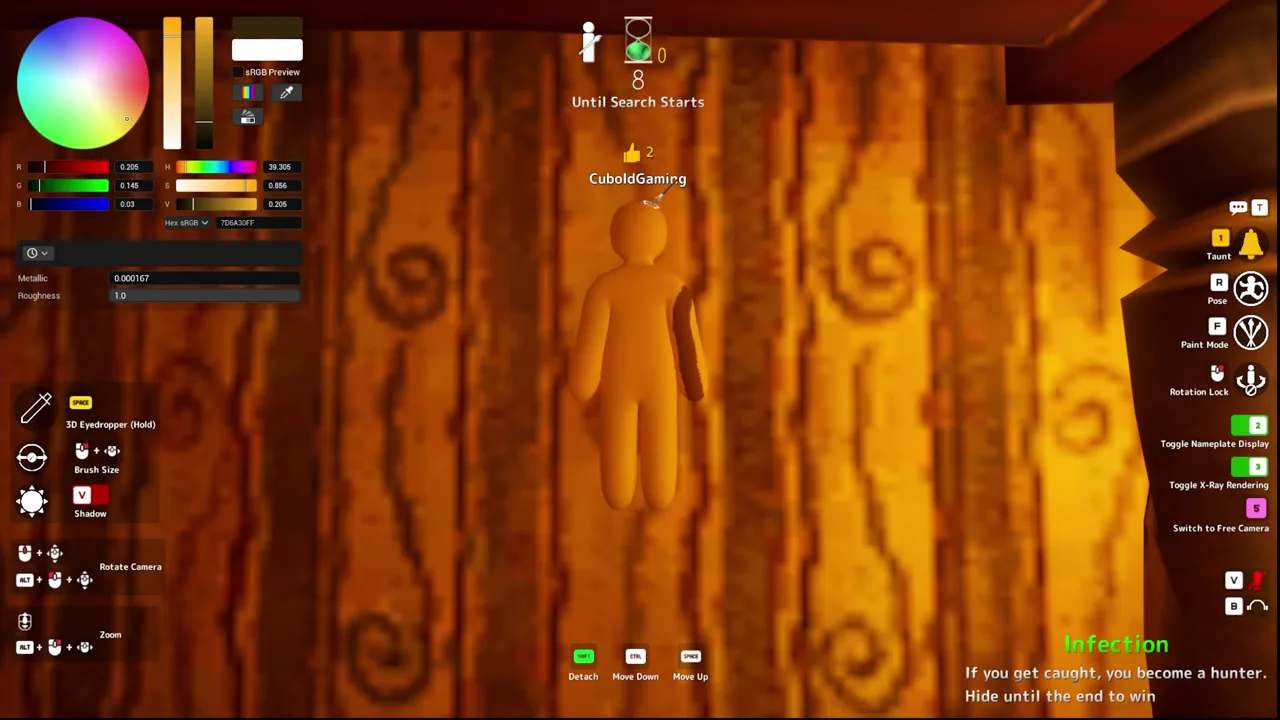
MECCHA CHAMELEON divides a round between Hiders who prepare visual camouflage and Seekers who inspect the stage after preparation ends. The rules are simple at the top level, but several systems determine what each role can do: match phases, paint and surface controls, pose selection, movement, tagging, mode-specific role changes, and the results screen. This page explains those systems as a reference.
Core win conditions
A Hider's objective is to remain untagged until the hunt timer expires. A Seeker's objective is to tag all Hiders before that timer reaches zero. The current room settings and selected mode determine how roles are assigned and whether a tagged player remains out or joins the hunt. Because those details can change between modes or patches, the lobby screen and current in-game prompts are authoritative.
| Role state | Objective | Round-ending condition |
|---|---|---|
| Active Hider | Avoid a valid tag through the hunt | The timer expires or the player is tagged |
| Active Seeker | Locate and tag remaining Hiders | Every required Hider is tagged or time expires |
| Host | Choose the map, mode, privacy, and available room options | The host starts or closes the session |
Match phases and role transitions
A normal round moves through a lobby or setup state, role assignment, Hider preparation, the hunt, and results. During preparation, Hiders can choose a position, select a pose, sample local colour, and paint. Seekers do not receive a fair visual search until that preparation window closes. During the hunt, Hiders protect their disguise while Seekers inspect the environment and attempt valid tags.
- Lobby: players join and the host selects available map, mode, and room options.
- Assignment: the game communicates each player's current role.
- Preparation: Hiders create and check a disguise while Seekers wait.
- Hunt: Seekers enter the stage; the timer and selected mode govern the remaining state.
- Results: the round reports outcomes and reveals information useful for the next attempt.
Paint, Spoid, pose, and movement
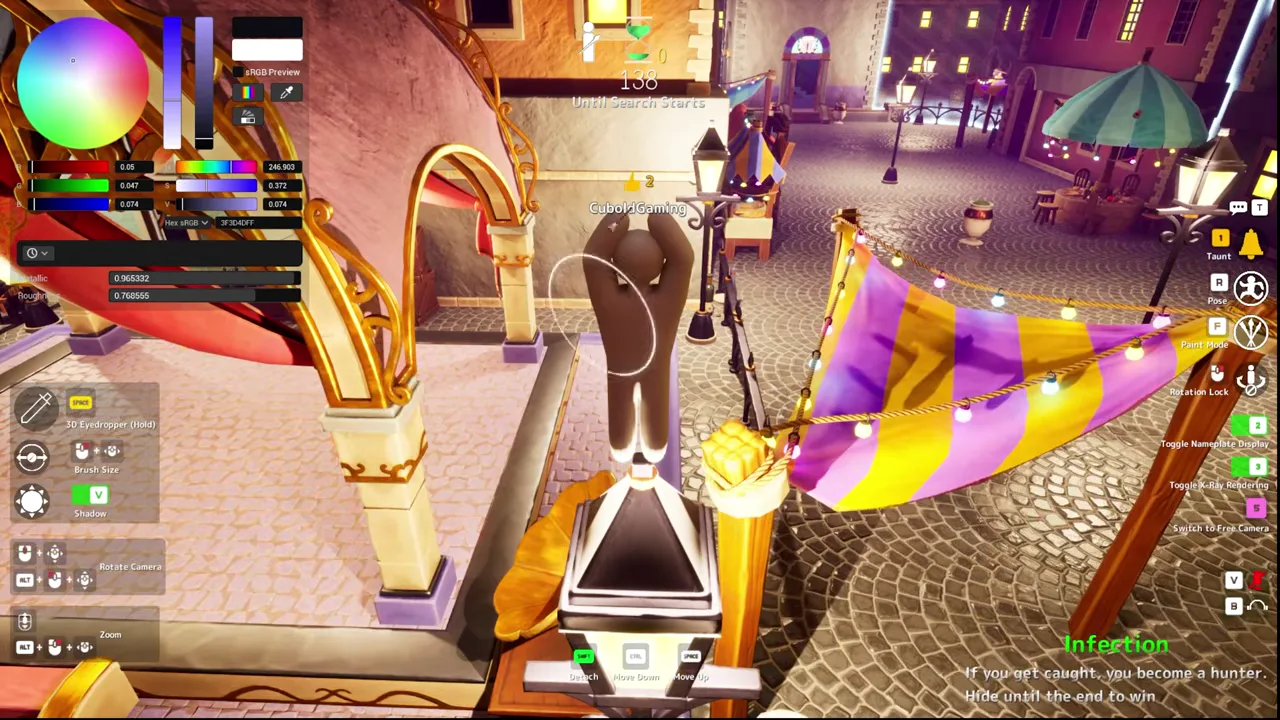
Paint changes the Hider's visible body rather than turning the player into a preset prop. Spoid samples a colour from the environment so a Hider can work from a local reference instead of guessing. Surface options such as roughness or metallic appearance affect how that colour reacts to light. Pose changes the body outline; it should be selected before detailed paint because moving limbs afterward changes which surfaces face the room.
Movement remains a separate system from paint. A good colour match does not hide motion, audio, or an outline that cuts across the backdrop. Likewise, a compact pose cannot compensate for a bright colour break. The mechanics work together: placement supplies the background, pose manages silhouette, paint manages local appearance, and stillness preserves the finished disguise during the hunt.
| System | What it changes | What it does not guarantee |
|---|---|---|
| Spoid and colour | Local hue reference | Correct shadow or convincing outline |
| Surface settings | Light response and finish | A match from every viewing angle |
| Pose | Body silhouette and scale | Correct colour or safe placement |
| Movement | Position and approach options | Continued concealment once observed |
Tagging and Seeker interaction
Seekers convert a visual suspicion into a game action by attempting a tag with the role's current input and on-screen rules. A sweep therefore has two stages: identify a shape or surface that breaks the environment, then test it using the permitted interaction. The game, not the guide, determines whether an attempted tag is valid. Players should follow current prompts rather than assuming an older key binding or patch behavior.
Normal, Infection, and Double
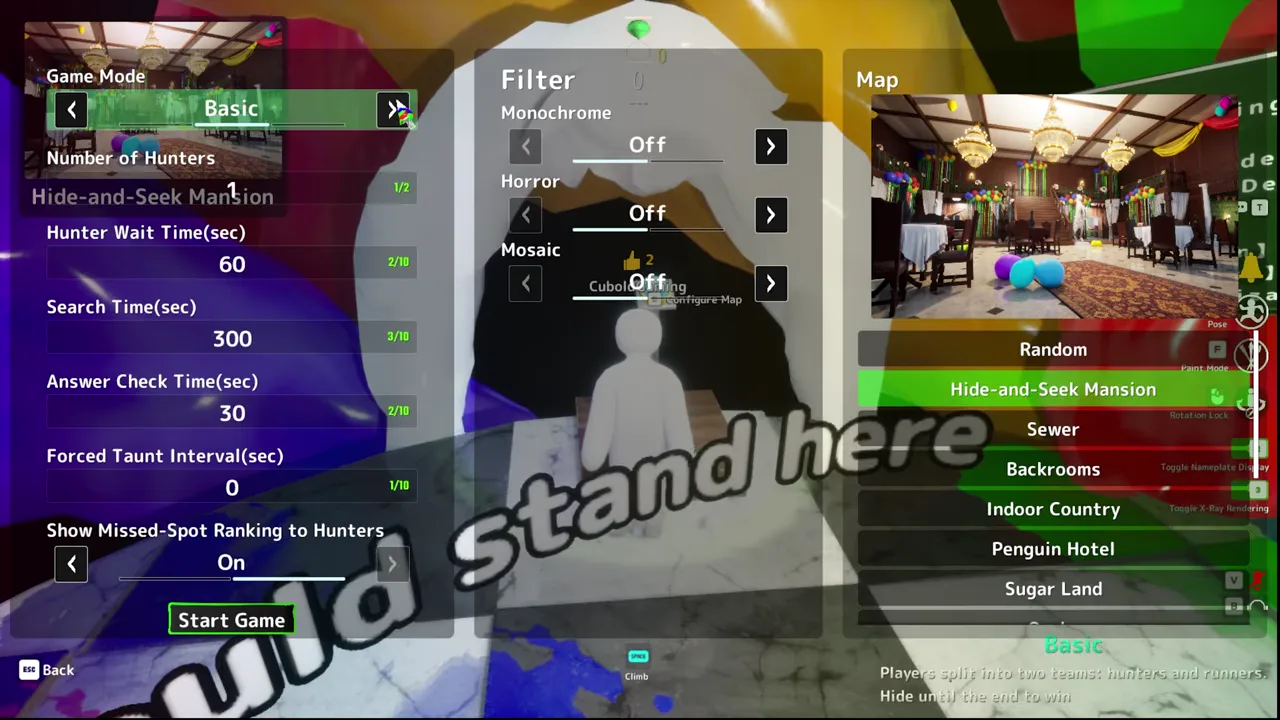
Normal preserves the clearest fixed-role hide-and-seek structure. Infection changes the hunt after a Hider is caught by adding that player to the searching side, so the number of active Seekers can grow. Double gives players both hiding and searching responsibilities within its round structure. Confirm the live lobby text before starting because player counts, available settings, and patch revisions can alter practical details.
| Mode | Defining role behavior | Rule detail to confirm |
|---|---|---|
| Normal | Fixed-role hide and hunt | Selected map, timer, and room settings |
| Infection | Tagged Hiders can join the search | How the current lobby communicates conversion |
| Double | Players take both role responsibilities | Round order and scoring shown by the current build |
Controls, settings, and patch caveats
Control labels in this reference describe functions, not a permanent binding promise. Use the current Settings menu and on-screen prompts for movement, camera, painting, pose, tagging, and any accessibility or surface options. Controller users should consult the controls and settings reference. If a mechanic differs from this page, check the verified patch archive and trust the current build while the article is reviewed.
Results screen and rule feedback
The results screen closes the rule loop by showing the outcome after the timer or required tags resolve the round. It can reveal hiding choices and help players distinguish a rules misunderstanding from a tactical mistake. A player who misunderstood a role transition should verify the mode; a player who was found because of an outline should move to camouflage practice. Do not treat a displayed score as proof that one route or paint pattern will remain optimal after a patch.