
Official Maps in MECCHA CHAMELEON
Pick the stage in your next lobby, learn its recurring materials and sightlines, then test one idea in a private round. These notes are built for scene reading, not permanent “best spot” claims.
Choose one material family
Start with one repeatable cue: hay, hotel plush, office furniture, painted wall, or a shadowed truck surface.
Match shape before detail
Height, width, and silhouette have to belong to the scene before a colour match can rescue the position.
Audit the approach route
Walk the likely Seeker angle once. A disguise that works from close up can fail from the doorway or far lane.
 Map 01
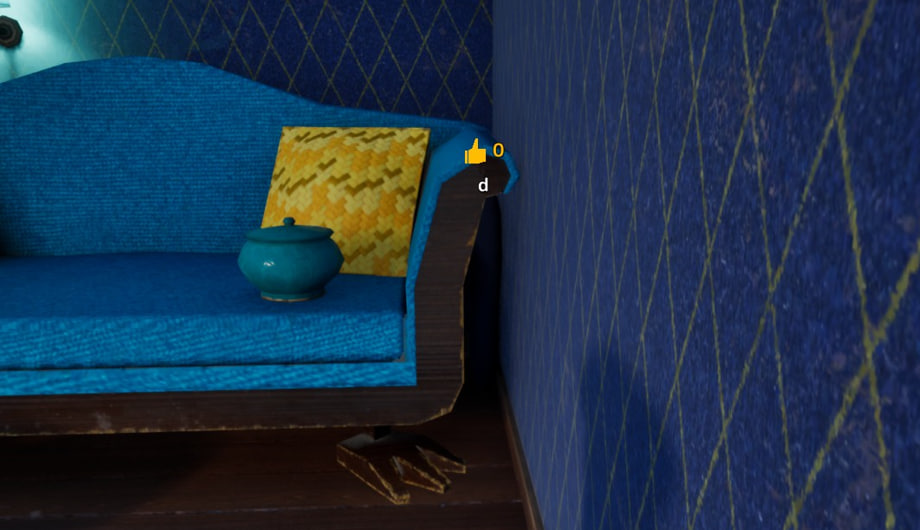
 Penguin Hotel
Penguin Hotel plays like a multi-room mansion: a busy central ballroom, a second-floor overlook, side bedrooms, and narrow hallways between zones. v1.2.0 added the map and v1.4.0 expanded layout connections — retest old clips before you treat any route as permanent.
Penguin ballroom floor · Upper mezzanine
 Map 02
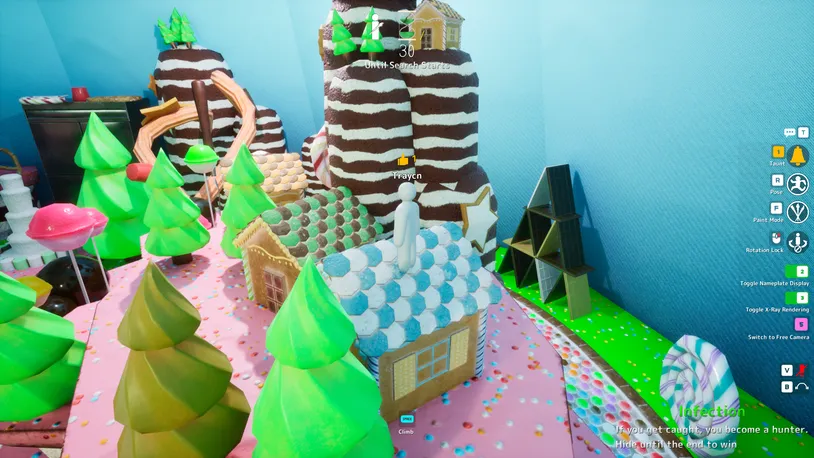
 Sugarland
Sugarland is a large, saturated candy environment — gumdrops, gingerbread walls, chocolate hills, and open centre piles. Bright lighting punishes flat one-colour paint and exposed limbs; local shadow sampling matters more than picking a favourite candy colour.
Candy houses & chocolate hill · Centre gumdrop piles
 Map 03
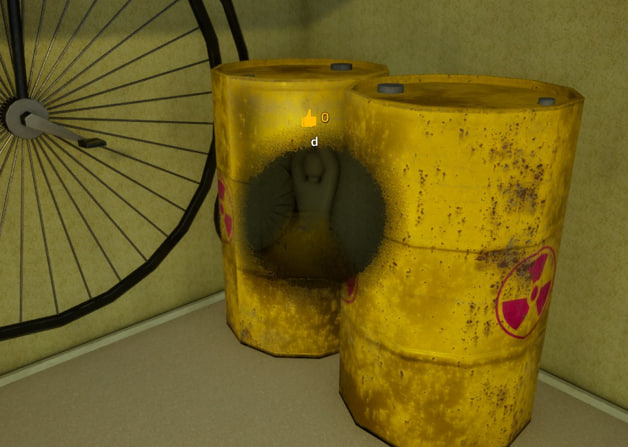
 Backrooms
Backrooms mixes off-yellow wallpaper, office furniture, party décor, and a broken road segment with police props. v1.2.0 adjusted wall-stuck behaviour — pre-patch exploit clips are historical, but the map still teaches strong repetition reading.
Chair, ladder & drawer cluster · Trash wall corners
 Map 04
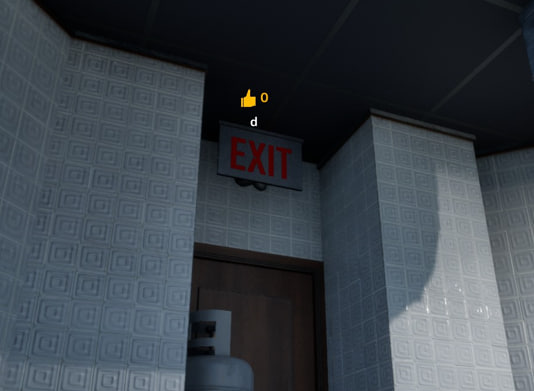
 Mansion
The Hide-and-Seek Mansion splits into a hectic central ballroom and quieter side rooms — study, storage, and mixed salon spaces. It is easy to get lost as a Hider, which makes deliberate spot choice more important than roaming.
Main ballroom · Study library
 Map 05
 Indoor Country
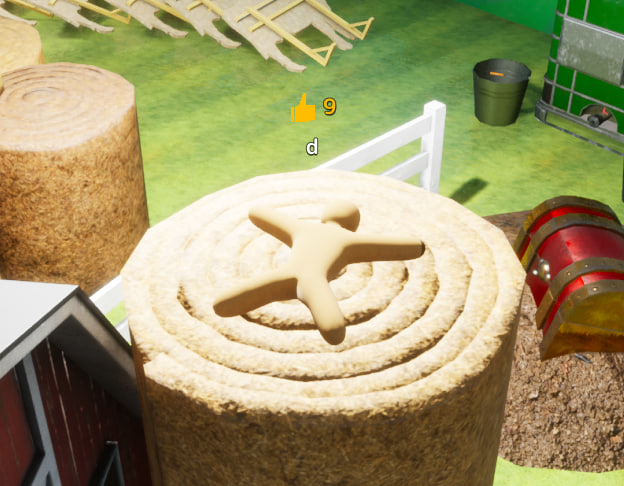
Indoor Country simulates an outdoor barnyard indoors — cows, horse statues, hay, pumpkins, and fence lines in a relatively open floor plan. It feels smaller than hotel or mansion maps, so scale mistakes show up quickly.
Hay, pumpkin & crate corner · Horse standee row
 Map 06
 Sewer
Sewer is a darker map with open centre piles, side locker rooms, flooded graffiti areas, and vending-machine zones. Many spots feel exposed, but poor lighting rewards correct local shade and line-following silhouettes.
Centre canister & sandbag pile · Tea-pot lit nook
 Map 07
 Osaka
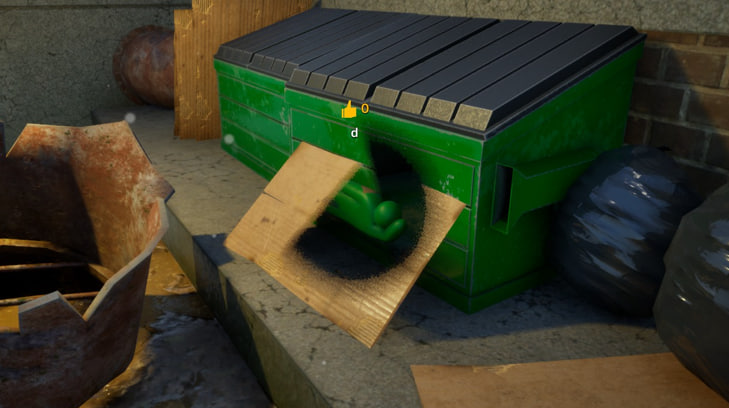
Osaka is the smallest official map — tight city blocks, a truck yard, overhead signage, open shop faces, and stacked corner clutter. Less space means fewer forgiving angles; spot choice and shadow matter more than decorative paint.
Truck yard & partial wall · Overhead signs & octopus wall
How these notes are maintained: stage names and public map context are source-checked; spot, pose, paint, and sweep advice is original practice guidance that should be retested after patches.
Game overview
MECCHA CHAMELEON is a paid Steam hide-and-seek party game by lemorion_1224 (LEMORION). Hiders hand-paint camouflage each round; Seekers hunt in first person with no flashlight. Success depends on spot, pose, and local colour — not preset prop skins.
Players often describe the loop as paint hide and seek: Hiders paint their body to blend into the scene, then Seekers scan for silhouettes, colour breaks, and motion. If you want a fast feel for that loop before reading tables, try the third-party Browser Practice page.
| Attribute | Detail |
|---|---|
| Platform | Steam (Windows) |
| Players | 2–10 recommended |
| Release | 2026-06-09 |
| Languages | 12 on Steam |
| Store price | $5.99 — check Steam for regional pricing |
| Community content | Steam Workshop supported from v1.2.0 onward |
| Not on | Roblox, mobile, or consoles at launch |
Standard round structure
- Lobby — Host selects map, mode, privacy, and optional Workshop stage.
- Role split — Hiders vs Seekers (dynamic in Infection mode).
- Prep — Hiders move, pose, Spoid, and paint; Seekers are locked out.
- Hunt — Seekers tag Hiders; timer or full tags end the round.
- Results — Full reveal of every hide spot for learning.
Modes, mechanics & controls
Community coverage commonly labels lobby formats as Normal, Infection, and Double. Confirm win conditions in your current lobby before the room starts.
| Topic | Summary | Check in your lobby |
|---|---|---|
| Lobby modes | Normal, Infection, and Double are the familiar three formats. | Exact win conditions, role switching, and room limits. |
| Paint and pose | Hand-painted camouflage is core; v1.2.0 added two new poses. | Pose names, keybinds, and map-specific interactions. |
| Ranking | v1.2.0 cites distance and time in a Hunter’s line of sight. | Compare routes by exposure and round outcome. |
| Platform | Steam lists Windows and recommends groups of 2–10. | Regional price and unlisted platform support. |
Find your next read
| If your next match problem is… | Read this first | Then continue to |
|---|---|---|
| “I need a quick first-round plan.” | Beginner's Hub | One practice round in a private lobby |
| “I want a related browser warm-up.” | Browser Practice | Then return here for MECCHA CHAMELEON rules and map notes |
| “My colour looks close but I still stand out.” | Camouflage Simulator | A map note for the stage in your queue |
| “I keep missing people as a Seeker.” | Official map notes above | Read the Seeker cues, then test a reverse angle |
| “Our group cannot get a room running.” | Online guide | Change one setting at a time until the lobby loads |
| “A clip shows a trick I cannot reproduce.” | Updates | Current map note and a private test |
Core skills for a better round
- Scene reading: pick one wall edge, pattern, or lighting change before opening paint.
- Shape control: pose to reduce an obvious human outline before the final colour pass.
- Local paint: sample the surface beside your final position; cover broad planes first.
- Route reading: as a Seeker, revisit the scene from more than one angle.
Spot → Pose → Paint
Commit to a backdrop before opening the palette. Silhouette and local colour beat decorative detail every time.